- contact@accredit.hu
- SZTE Science Park - 6728 Szeged, Budapesti út 9.


0
+
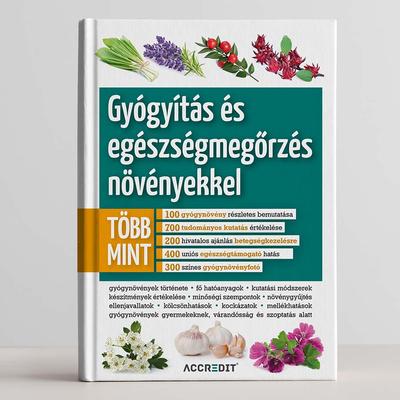
In publishing this book, we aim to help people who use herbs occasionally or regularly to gain a concise, yet authentic and comprehensive insight into the world of herbal medicine. Amongst other things, they should be aware of the most popular herbs and how they can be used to treat illnesses and promote health.
Another important aim of publishing the book was to ensure that after reading it, readers have only one question when choosing a herbal product: what is its quality? This should not be an issue for medicinal products used for the treatment of diseases, but it can be an important consideration for products marketed as food or food supplements.
The authors provide more than 200 recommendations for disease management based on the monographs of the European Medicines Agency's Herbal Medicinal Products Committee (EMA HMPC). Whether it is respiratory ailments, joint problems, urinary tract infections, liver support, constipation, cardiovascular complaints, digestive problems, among others, the book is sure to contain herbs that can be used with good reason. The book can even be used as the basis for your own herbal home remedy for the most common ailments.
The authors studied and evaluated more than 700 trials with medicinal plants for robustness. The results of laboratory studies, animal experiments and observational and clinical research in humans are all included.
More than 400 health benefits of medicinal plants are listed in the publication, which was compiled by the authors on the basis of a European Food Safety Authority list. The recommendations include can help to reduce weight, maintain healthy cholesterol and blood sugar levels, maintain cardiovascular health, maintain menstrual comfort or even boost breast milk production.
Each product has its own advantages and disadvantages. The book explores these in detail, including teas, tinctures, powders, dry extracts.
The action of medicinal plants is due to the specific structure of the active substances they contain, which the book describes by focusing on their uses. In this way, they can be studied in detail, how and what the saccharides, essential oils, tannins, flavonoids, saponins, bitter substances, alkaloids, coumarins, carotenoids and glucosinolates act on.
The book also answers this frequently asked question, comparing the active ingredients of herbal and synthetic medicines, the complexity and strength of their effects and their possible side effects.
Everyone knows the last sentence in the advertisements for medicines by heart: „For information on risks and side effects, read the package leaflet or ask your doctor or pharmacist.”However, herbal medicines are not usually accompanied by a leaflet, doctors usually know little about them, and even pharmacists may have limited knowledge about some herbs. The book fills this gap, partly with general advice, but also with specific advice on the 100 herbs described in the book.
Which herbs can have what effect on the body of the mother, the developing foetus and the baby? The experts in the book have looked at which herbs can be consumed and which are contraindicated during this period.
While herbs can help in many areas of health and disease management, there are three main areas where they can be used safely and safely in children: gastrointestinal complaints, colds, immune system support, and sedative, sleep-promoting effects. The book includes age-appropriate dosage for all herbs the authors help parents make safe and effective choices.

Specialist pharmacist, herbalist, scientific advisor. Nationally recognised pharmacovigilance, pharmacognosy expert.

Doctor of the Hungarian Academy of Sciences, pharmacist, herbalist. State-approved drug control, pharmacognosy (natural medicine) expert.

Certified horticultural engineer, herbal application engineer, phytotherapist.